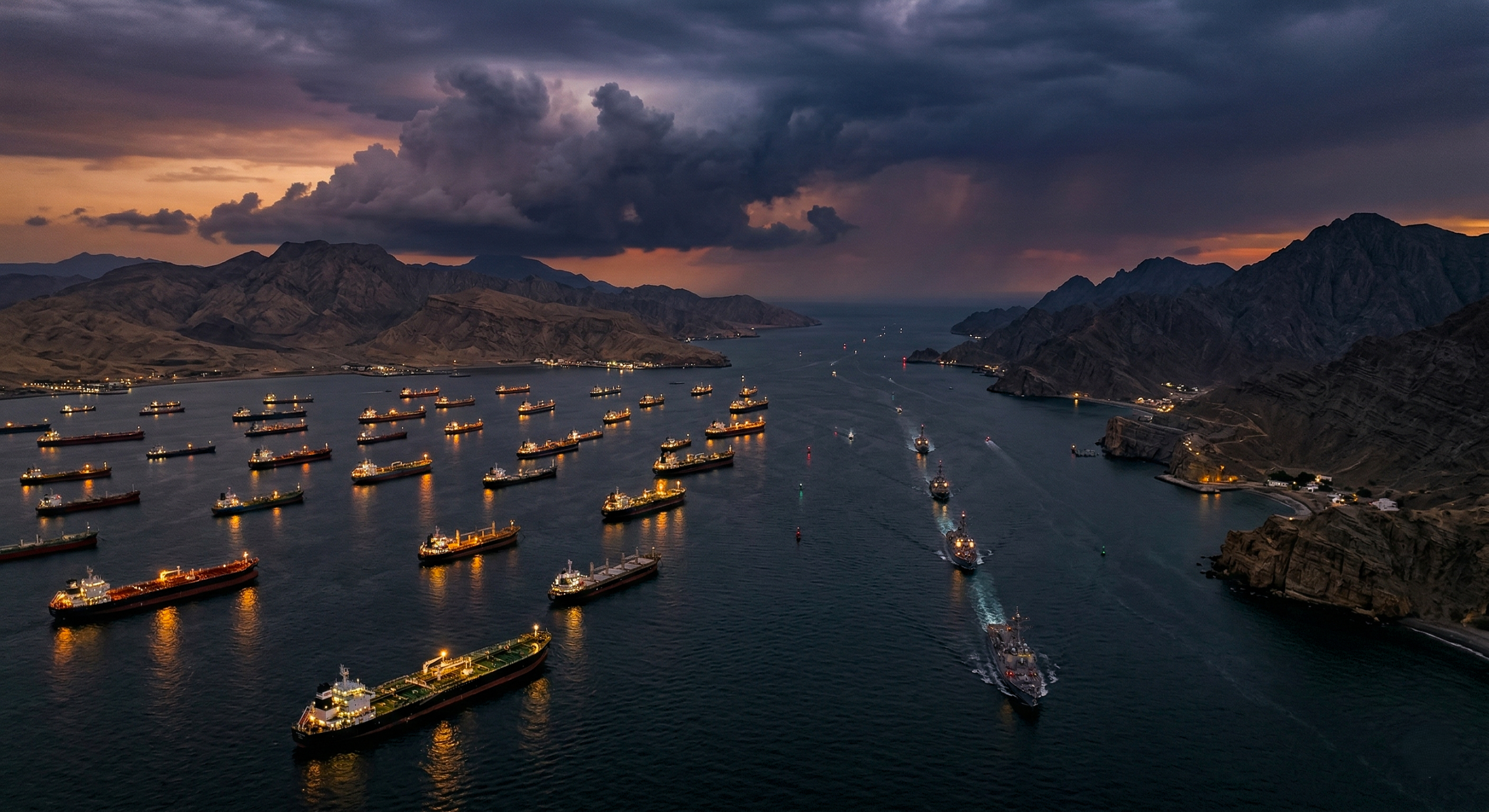
The Strait of Hormuz closed to most of the world’s shipping more than five weeks ago, and as of this morning, Iran shows no intention of backing down — even as President Donald Trump’s 8 p.m. ET Tuesday deadline to reopen the waterway expires and he threatens the “complete demolition” of Iranian infrastructure.
┌─────────────────────────┬──────────────────────────────────────────────────┐
│ ~20% │ Of global oil supply that transits the strait │
│ │ daily │
├─────────────────────────┼──────────────────────────────────────────────────┤
│ $126 │ Per barrel — Brent crude peak price since │
│ │ closure │
├─────────────────────────┼──────────────────────────────────────────────────┤
│ $4.14 │ National avg. U.S. gas price per gallon (Apr. 8) │
├─────────────────────────┼──────────────────────────────────────────────────┤
│ 3,400+ │ People killed across the Middle East since │
│ │ Feb. 28 │
└─────────────────────────┴──────────────────────────────────────────────────┘
KEY POINTS:
■ Iran’s IRGC officially closed the Strait of Hormuz on March 2, 2026, to ships linked to the U.S. and Israel
■ Brent crude surpassed $100/barrel on March 8 for the first time in four years, peaking at $126
■ Trump set an 8 p.m. ET Tuesday (Apr. 7) deadline for Iran to reopen the strait or face infrastructure strikes
■ Iran rejected a U.S. ceasefire proposal, offering instead a 10-clause counter-proposal
■ The IEA called this the “largest supply disruption in the history of the global oil market”
■ Pakistan’s PM asked Trump to extend the deadline two weeks; the IRGC threatened to close Bab al-Mandeb next
WASHINGTON — The Strait of Hormuz closed to the vast majority of the world’s oil tankers has now become the central battlefield of what is rapidly becoming the most economically catastrophic military conflict since World War II. Since Iran’s Islamic Revolutionary Guard Corps (IRGC) formally sealed the narrow 21-mile chokepoint in early March, oil prices have shattered records, U.S. gas prices have surged nearly 39 percent, and global supply chains are fracturing — all while diplomats scramble to prevent the conflict from entering a catastrophic new phase.
With President Trump’s Tuesday-night deadline now passed, the world is watching to see whether the administration follows through on its promise to reduce Iran’s power grid, bridges, and industrial plants to rubble — or whether back-channel diplomatic negotiations will avert yet another military escalation.
How the Strait of Hormuz Closed — and Why It Matters
The current crisis began on February 28, 2026, when the United States and Israel launched coordinated airstrikes on Iran under an operation called Operation Epic Fury, targeting military facilities, nuclear sites, and Iranian leadership — including Supreme Leader Ali Khamenei, who was killed in the strikes.
Within days, Iran retaliated. Iran’s IRGC officially confirmed on March 2 that the strait was closed, threatening any vessel that attempted passage. The announcement triggered an immediate flight of shipping companies — Maersk and Hapag-Lloyd among them — from Middle Eastern routes.
| BLOCKQUOTE:
| “The Strait of Hormuz will remain closed,” read a billboard in Enghelab Square in Tehran
| that became one of the defining images of the conflict.
| — Reported by Al Jazeera, April 6, 2026
The strait is 21 miles wide at its narrowest point, surrounded on three sides by Iranian territory. Before the war, approximately 135 vessels transited the waterway per day, carrying an estimated 20 million barrels of oil — roughly 20 percent of global petroleum supplies — along with 19 percent of all global liquefied natural gas (LNG) trade, according to the U.S. Energy Information Administration.
That daily traffic collapsed to a total of just 116 crossings between March 1 and March 25, according to the Financial Times. The Strait of Hormuz closed corridor has split into two: an IRGC-controlled northern route and a southern corridor near Oman’s coast — but Iran has also attacked Omani port facilities, making even that alternative precarious.
Trump’s Deadline: “Every Bridge in Iran Will Be Decimated”
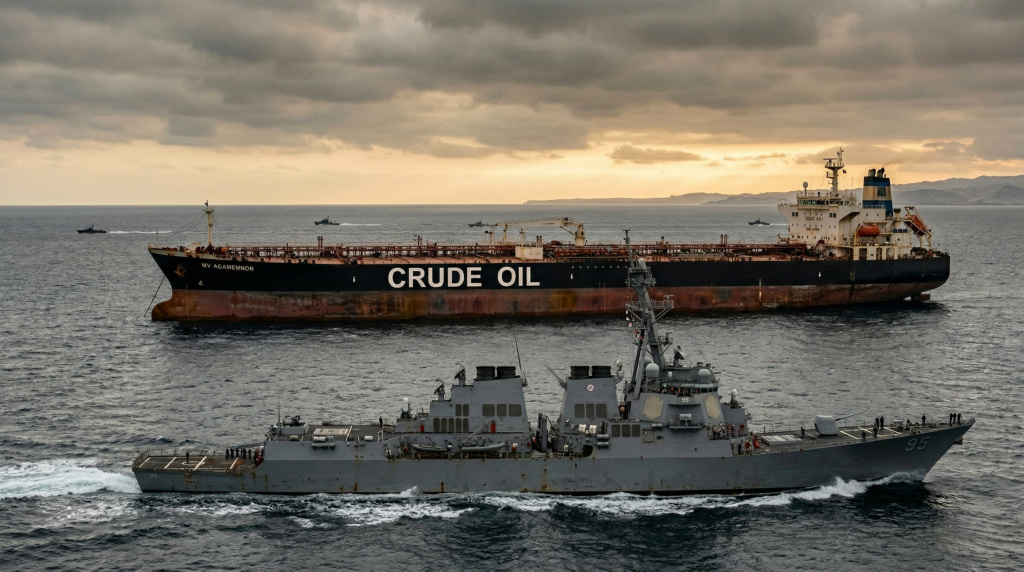
President Trump set a hard deadline of 8 p.m. ET on Tuesday, April 7, for Iran to allow free passage through the Strait of Hormuz or face what he described as “the complete demolition” of Iran’s critical infrastructure.
| BLOCKQUOTE:
| “We have a plan where every bridge in Iran will be decimated by 12 o’clock tomorrow night,
| where every power plant in Iran will be out of business, burning, exploding and never to
| be used again.”
| — President Donald Trump, White House, April 7, 2026
Asked repeatedly by reporters whether the deadline was truly final, Trump said “yeah.” He also described an Iranian counter-proposal as “a significant step” but added: “It’s not good enough.” The White House confirmed the ceasefire proposal from Tehran was under consideration but that Trump “has not signed off” on it, and that Operation Epic Fury continues.
Iran, for its part, rejected any deal framed as a temporary ceasefire. “We won’t merely accept a ceasefire,” said Mojtaba Ferdousi Pour, head of Iran’s diplomatic mission in Cairo. “We only accept an end of the war with guarantees that we won’t be attacked again.”
Related: See: Trump Administration Pauses 19-Country Immigration Applications: 7 Critical Facts
Iran’s Counter-Proposal: What Tehran Is Demanding
Rather than simply complying with Trump’s demand to reopen the Strait of Hormuz, Iran sent a 10-clause counter-proposal through Pakistan, according to state media outlet IRNA. The demands include:
- A permanent, guaranteed end to all regional conflicts — not merely a temporary ceasefire
- A formal protocol for safe passage through the Strait of Hormuz
- The lifting of all U.S. and international sanctions on Iran
- International reconstruction assistance
- Guarantees against future military attacks on Iranian territory
Egyptian officials involved in the talks told NPR that Iran is open to a 45-day ceasefire that guarantees a permanent end to the war — but only if the strait’s reopening is negotiated, not unilaterally demanded. Qatar’s prime minister made a series of calls with counterparts in India, Spain, and Norway, emphasizing “the need for negotiations to contain the crisis and ensure global energy security,” according to the Qatari Foreign Ministry [https://www.qatarembassy.net/].
Pakistan’s Prime Minister Shehbaz Sharif asked Trump to extend the deadline by two weeks and separately urged Iran to open the Strait of Hormuz as a “gesture of goodwill” to allow diplomacy to proceed. The IRGC responded by warning it would respond “outside the region” and deprive the U.S. and its allies of oil and gas “for many years” if the U.S. crosses what it called “red lines.”
The Economic Earthquake: What the Strait of Hormuz Closed Means for Your Wallet
The International Energy Agency [https://www.iea.org/] has characterized Iran’s blockade as the “largest supply disruption in the history of the global oil market” — surpassing even the 1973 oil crisis. The numbers explain why.
Brent crude surpassed $100 per barrel on March 8, the first time in four years, rising to a peak of $126 per barrel. With the strait closed, approximately 20 percent of global oil supplies have been effectively severed. Iraq, Kuwait, and other Gulf producers began curtailing output in early March as storage filled to capacity with no tankers available to export their product.
The Federal Reserve Bank of Dallas estimated that a full quarter’s closure of the Strait of Hormuz would raise the average West Texas Intermediate oil price to $98 per barrel and lower global real GDP growth by an annualized 2.9 percentage points. Goldman Sachs raised its recession probability forecast for the U.S. to 25 percent — up 5 percentage points.
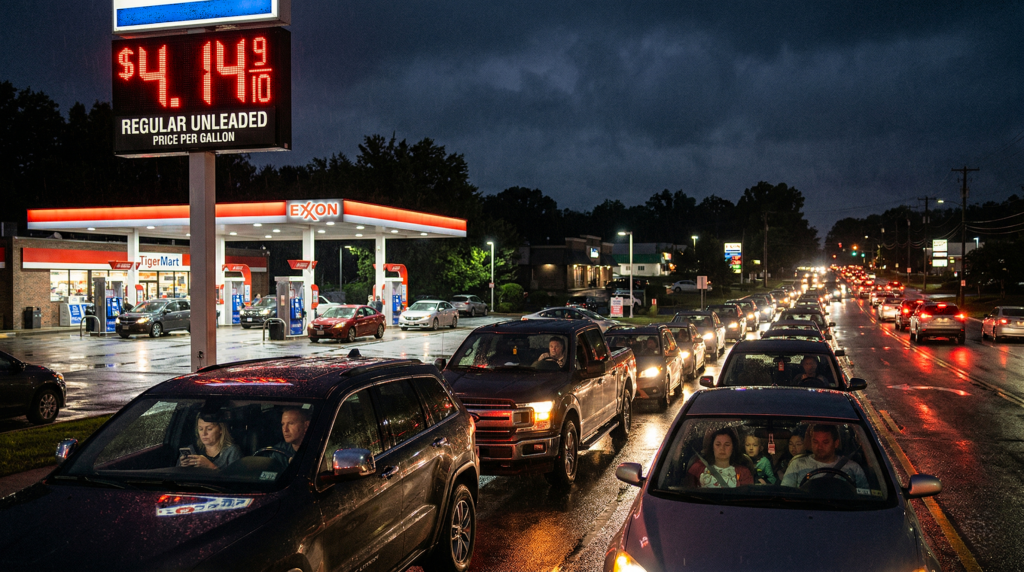
For American consumers, the pain is immediate and measurable. U.S. gasoline prices have risen to a national average of $4.14 per gallon as of April 8, according to AAA — a 39 percent increase from the $2.98 average recorded on February 26, the day before the war began.
But oil is not the only concern. The World Economic Forum has identified at least nine critical commodity categories disrupted by the strait closure, including:
- Fertilizer: Urea prices rose 50 percent since the war began; roughly one-third of global seaborne fertilizer trade transits the strait, threatening the U.S. spring planting season for corn and soybeans.
- LNG: QatarEnergy declared force majeure on all LNG contracts; the world’s biggest LNG plant sustained missile damage that could take up to five years to repair.
- Aluminum: Supplies from Gulf smelters have been disrupted, pushing industrial input costs higher.
- Sulfur: Nearly half of all global seaborne sulfur trade — a critical input for fertilizers, batteries, and copper refining — passes through the strait.
| BLOCKQUOTE:
| “A short closure of the Strait of Hormuz is an oil shock. A long closure becomes an
| inflation and growth shock.”
| — Mohsen Khezri, LSE Business Review, March 2026
A Two-Corridor Strait: Iran’s Selective Access Policy
One of the most geopolitically significant developments in recent days is Iran’s decision to permit selective transit through the Strait of Hormuz closed to most Western-linked vessels. Tehran has been negotiating country-by-country access agreements, allowing ships from non-aligned nations — notably Malaysia, whose seven vessels were given safe passage this week — to transit the IRGC-controlled northern corridor.
This selective access strategy has multiple strategic objectives, according to analysts at the National University of Singapore and the University of Exeter interviewed by TIME Magazine :
- It undermines U.S. leverage by demonstrating Iran can manage the strait without American involvement
- It pressures non-aligned countries not to join any U.S.-led military coalition against Iran
- It generates revenue by allowing Iran’s own oil to reach buyers, particularly China
Iran’s senior adviser Aliakbar Velayati escalated this pressure further on Monday, warning that Tehran could also move to close the Bab al-Mandeb Strait — the chokepoint between Yemen and East Africa that connects the Red Sea to the Gulf of Aden and the Suez Canal, through which an estimated 10 percent of global trade flows. Iran-backed Houthi militants, who entered the conflict last week by attacking Israel, operate in Yemen and could execute such a threat.
Timeline: How the 2026 Strait of Hormuz Crisis Escalated
Feb. 28 | U.S. and Israel launch Operation Epic Fury against Iran; Supreme Leader Khamenei killed.
Mar. 2 | IRGC officially announces Strait of Hormuz closed to U.S.- and Israel-linked vessels. No tankers broadcast AIS signals overnight.
Mar. 8 | Brent crude tops $100/barrel for the first time in four years.
Mar. 9 | Trump announces intent to seize control of the Strait of Hormuz, warns Iran against laying mines.
Mar. 11 | IEA announces unprecedented release of 400 million barrels from strategic reserves.
Mar. 19 | U.S. Armed Forces begin a military campaign to open the strait.
Mar. 31 | Gas prices hit $4/gallon for the first time since August 2022; U.S. strikes Kharg Island.
Apr. 6 | Iran formally rejects U.S. ceasefire proposal; submits 10-clause counter-proposal via Pakistan.
Apr. 7 | Trump sets 8 p.m. ET deadline for Iran to reopen strait or face infrastructure strikes. Gas reaches $4.14/gallon.
Apr. 8 | Deadline passes. World awaits Trump’s next move as diplomats from Pakistan, Egypt, Qatar urge extension.
======================================================================
The White House’s Dilemma: Can the U.S. Reopen the Strait?
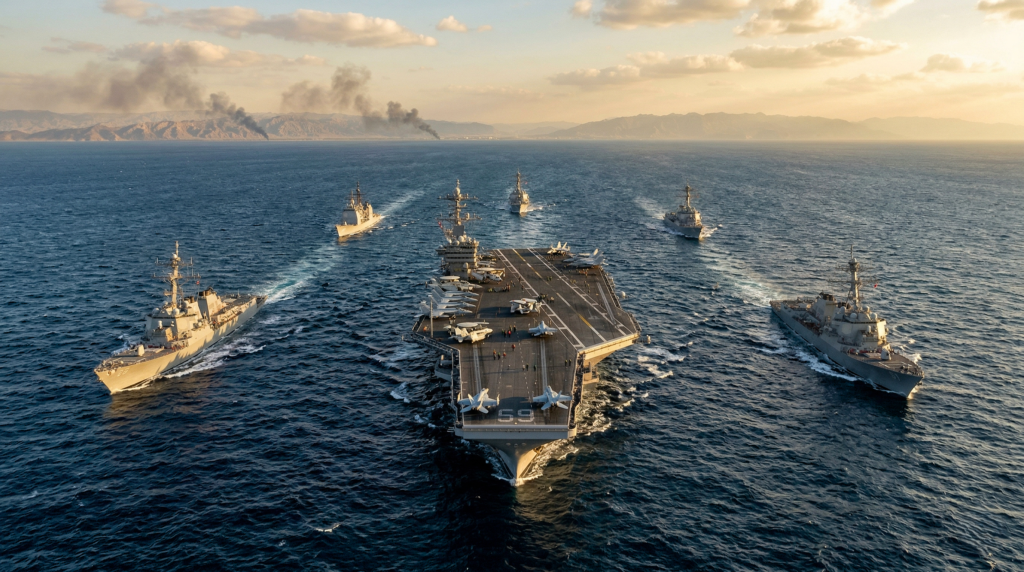
Behind the scenes, the situation inside the Trump administration is more complicated than the public bravado suggests. Senior administration officials have privately acknowledged to CNN that they cannot both achieve their military objectives quickly and promise to reopen the Strait of Hormuz within the same timeline.
Defense Secretary Pete Hegseth said at a Pentagon briefing: “This Strait of Hormuz issue… is not just a United States of America problem set.” Secretary of State Marco Rubio has sought to build an international coalition to police the strait but acknowledged it remains a longer-term goal. The U.S., Rubio said, is “working hard to make that happen.”
Meanwhile, China and Pakistan have proposed their own five-point peace plan for the Middle East, which includes a clause on protecting civilian ships stranded in the strait and restoring commercial navigation — a move that directly challenges U.S. diplomatic leadership in the region.
======================================================================
International Law and the Strait of Hormuz
Legal scholars have argued that Iran’s closure of the Strait of Hormuz constitutes a violation of the United Nations Convention on the Law of the Sea (UNCLOS), which guarantees the right of “transit passage” through international straits used for navigation. Under international law, no coastal state may suspend such passage.
Human rights experts, including former Human Rights Watch executive director Kenneth Roth, have simultaneously warned that Trump’s threats to target Iranian civilian infrastructure — power plants, bridges, and desalination facilities — could themselves constitute war crimes under the Fourth Geneva Convention, which prohibits collective punishment of civilian populations.
Related: Hidden VA Benefits Veterans Can Still Claim: Powerful Support Too Many Families Miss
What Comes Next: 3 Scenarios
Scenario 1 — Diplomatic Deal
Pakistan, Egypt, Qatar, and Oman continue mediating. Iran agrees to a limited reopening of the Strait of Hormuz as part of a 45-day ceasefire framework, with negotiations on a permanent settlement to follow. Oil prices fall sharply; global recession risk recedes. This remains possible but requires Iran to abandon its demand for ironclad security guarantees — something no intermediary has yet been able to deliver.
Scenario 2 — U.S. Infrastructure Strikes
Trump follows through on his deadline threats. U.S. bombers and naval forces strike Iranian power plants, bridges, and industrial facilities. Iran responds with “more severe and expansive” attacks — its own words — potentially targeting Gulf state energy infrastructure, Bab al-Mandeb, and U.S. bases across the region. Oil prices spike toward the $170–$200/barrel range warned of by Wall Street analysts, tipping Europe and Asia into recession.
Scenario 3 — Prolonged Stalemate
Neither side blinks. The Strait of Hormuz remains closed to Western shipping for another month or more. The IEA’s 400-million-barrel reserve release buys time, but with Gulf producers already curtailing output by more than 10 million barrels per day, even strategic reserves cannot fully compensate. Stagflation takes hold across the G7. Midterm election dynamics in the U.S. force a political reassessment inside the White House.
FREQUENTLY ASKED QUESTIONS: Strait of Hormuz Closed
Q: Is the Strait of Hormuz still closed as of April 8, 2026?
A: Yes. The strait has been effectively closed to U.S.- and Israel-affiliated shipping since March 2, 2026. Iran’s IRGC continues to control the northern corridor and selectively allows passage to vessels from countries it deems friendly — such as Malaysia — while blocking or threatening tankers linked to Western nations. Trump’s April 7 deadline has passed with no resolution confirmed.
Q: How much oil passes through the Strait of Hormuz?
A: Under normal conditions, approximately 20 million barrels of oil and petroleum products transit the strait every day, representing roughly 20 percent of global seaborne oil trade and about 25 percent of world seaborne oil according to the IEA. About 19 percent of global LNG trade also passes through the waterway. Around 80 percent of these flows are destined for Asian markets — meaning China, Japan, South Korea, and India bear the heaviest direct exposure.
Q: Why can’t ships bypass the Strait of Hormuz?
A: There are limited alternatives. Saudi Arabia’s East-West pipeline and the UAE’s Abu Dhabi Crude Oil Pipeline can redirect some oil, but the IEA estimates these bypass routes can handle only 3.5 to 5.5 million barrels per day combined — leaving a shortfall of roughly 14.5 to 16.5 million barrels per day. Iran has also targeted Omani port facilities at Duqm and Salalah, complicating the southern corridor route. The Joint War Committee of the London insurance market has added Omani waters to its high-risk maritime list, raising costs for any ship attempting that route.
Q: How has the Strait of Hormuz closure affected gas prices in the U.S.?
A: Gas prices have risen nearly 39 percent since the war began on February 28. The national average for regular gasoline stood at $2.98 per gallon the day before the strikes; as of April 8, AAA reports that average is $4.14 per gallon — the highest since August 2022. The White House has taken steps including lifting some sanctions on Russian oil, coordinating the IEA strategic reserve release of 400 million barrels, and providing war-risk insurance for tankers to try to mitigate the price surge.
Q: Could Iran also close the Bab al-Mandeb Strait?
A: Iran has explicitly threatened this. Senior adviser Aliakbar Velayati said Iran views the Bab al-Mandeb “with the same intensity as Hormuz.” The Iran-backed Houthi militants in Yemen, who entered the conflict last week by attacking Israel, have the operational capacity to target shipping in that waterway. About 10 percent of global trade passes through Bab al-Mandeb, connecting the Red Sea to the Gulf of Aden and the Suez Canal. A simultaneous closure of both straits would constitute an unprecedented shock to global trade.
Q: What will happen if Trump strikes Iranian infrastructure?
A: Iran has warned of a “more severe and expansive” response, including attacks beyond the region and the disruption of oil and gas flows “for many years.” Human rights experts warn that striking civilian infrastructure — power plants, water desalination facilities, and bridges — may constitute war crimes under international humanitarian law. Bloomberg Economics estimates that at $170 per barrel, the oil shock would push the eurozone, the U.K., and Japan into economic contraction and create what it describes as an economic standstill in the United States. Goldman Sachs has already raised U.S. recession odds to 25 percent, and Oxford Economics’ “breaking point” scenario centers on oil averaging $140 per barrel for two months.
Q: What is the death toll so far?
A: As of April 7, more than 3,400 people have been killed across the Middle East since the conflict began. In Iran, U.S. and Israeli strikes have killed more than 1,900 people according to Iran’s deputy health minister. At least 1,400 people have been killed in Lebanon, and 23 in Israel. Thirteen U.S. service members have been killed in combat, with two additional deaths from non-combat causes. A downed F-15E aircrew member was successfully rescued from inside Iran in what Trump called a “historic” rescue mission.
Q: Is the Strait of Hormuz closure legal under international law?
A: Most international legal scholars say no. The UN Convention on the Law of the Sea (UNCLOS) guarantees the right of “transit passage” through straits used for international navigation, and prohibits coastal states from suspending that right. Iran’s closure has been widely described as a violation of UNCLOS. However, Iran is a signatory to UNCLOS and has argued that its actions are a legitimate response to what it characterizes as illegal acts of war by the United States and Israel.
Bottom Line
The Strait of Hormuz closed is no longer just a military story — it is a global economic emergency touching everything from the price of corn in Iowa to the cost of electricity in Japan. As Trump’s deadline passes and the White House weighs its next move, the world’s most strategically vital waterway remains a flashpoint where one decision — in Washington, in Tehran, or on the bridge of a U.S. warship — could send oil to $200 a barrel or bring a fragile peace one step closer.
What is clear is that the longer the Strait of Hormuz remains closed, the deeper and more permanent the economic damage becomes. The IEA’s strategic reserves are finite. Gulf producers cannot store oil indefinitely. And the clock — both Trump’s self-imposed deadline clock and the global economy’s pain threshold — continues to tick.
This article will be updated as developments warrant. For live updates, follow our Iran War Live Blog. For economic analysis, see our report on Oil Price Forecasts and the Global Recession Risk in 2026.
Key External Sources & References
- 2026 Strait of Hormuz Crisis — Wikipedia
- International Energy Agency (IEA) — Strategic Reserve Release
- Federal Reserve Bank of Dallas — Economic Impact Analysis
- World Economic Forum — 9 Commodities Disrupted by Hormuz
- U.S. Energy Information Administration — World Oil Transit Chokepoints
- United Nations — Law of the Sea (UNCLOS)
- LSE Business Review — Hormuz as Economic Clock of War
- Axios — Oil Prices and Recession Risk
- CNBC — How the Strait of Hormuz Closure Becomes Economic Tipping Point
- TIME — Iran’s Selective Closure and Country-by-Country Deals
© 2026 Federal Updates. All rights reserved. All external links are DoFollow unless otherwise noted.


