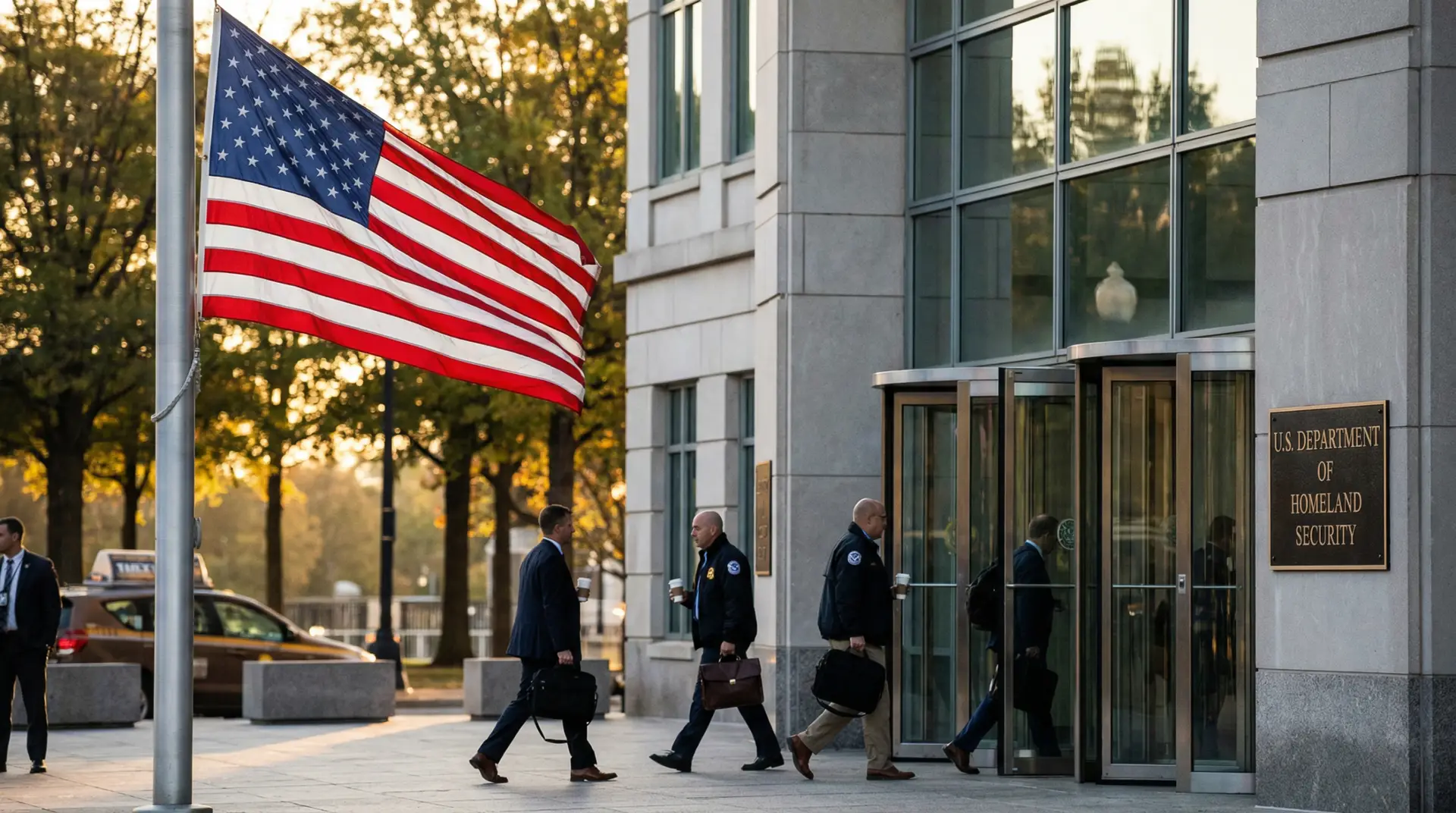
The Trump administration has paused immigration applications from 19 countries — a sweeping, unprecedented immigration enforcement action that has sent shockwaves through legal immigration channels across the United States. Announced via an internal U.S. Citizenship and Immigration Services (USCIS) memo dated December 2, 2025, the policy immediately froze green card requests, asylum petitions, naturalization ceremonies, and virtually every other immigration benefit for nationals of 19 high-risk nations.
What began as a targeted response to a violent tragedy near the White House has since evolved into one of the most expansive immigration crackdowns in modern American history — one that has since grown to affect nationals of 39 countries and, by January 2026, blocked immigrant visa issuance to people from 75 nations.
Why the Trump Administration Paused Immigration Applications from 19 Countries
The immediate catalyst was the shooting of two National Guard members near the White House on November 26, 2025 — a crime that drew national attention when the suspect was identified as Rahmanullah Lakanwal, an Afghan national who had entered the United States through the Biden administration’s Operation Allies Welcome humanitarian parole program. He had been granted asylum just months earlier, in April 2025, under the Trump administration itself.
The Department of Homeland Security (DHS) responded swiftly. Within days, USCIS published a four-page policy memo (PDF)— formally titled PM-602-0192 — directing agency employees to “stop final adjudication on all cases” for individuals from the 19 nations already listed under the June 2025 travel ban.
“USCIS has determined that the burden of processing delays that will fall on some applicants is necessary and appropriate in this instance, when weighed against the agency’s obligation to protect and preserve national security,” the memo stated.
President Trump had publicly said the week prior that he would “permanently pause migration from all Third World Countries,” though no immediate official list was published at the time. The December 2 memo formalized that direction.
The 19 Countries: Full List and Why Each Was Targeted
The Trump administration has paused immigration applications from 19 countries that were already restricted under Presidential Proclamation 10949, signed on June 4, 2025. The proclamation exercised authority under Section 212(f) of the Immigration and Nationality Act (INA), which gives the President broad power to suspend entry of foreign nationals deemed detrimental to U.S. interests.
The 19 countries were split into two tiers:
Full Travel Ban Countries (12 Nations)
| Country | Key Reason Cited |
|---|---|
| Afghanistan | Taliban governance; collapsed vetting infrastructure |
| Myanmar (Burma) | Military junta; ongoing civil war; 3M+ displaced |
| Chad | ~50% visa overstay rate; Sahel instability |
| Republic of Congo | High visa overstays; alleged prisoner releases to U.S. |
| Equatorial Guinea | High overstay rates; ranked among world’s least-free countries |
| Eritrea | Refuses deportees; one-party repressive state since 1993 |
| Haiti | Gang violence controls 80%+ of Port-au-Prince |
| Iran | U.S.-designated state sponsor of terrorism |
| Libya | “Historic terrorist presence”; passport integrity failures |
| Somalia | Described as a “terrorist safe haven” by White House |
| Sudan | Ongoing civil war; 30M+ people in need of aid |
| Yemen | Active U.S. military operations; Houthi rebel control |
Partial Travel Ban Countries (7 Nations — B, F, M, J Visas + Immigrant Visas Restricted)
- Burundi
- Cuba
- Laos
- Sierra Leone
- Togo
- Turkmenistan
- Venezuela
According to the Council on Foreign Relations, between May 2024 and April 2025, the U.S. had granted nearly 100,000 visas to nationals from these 19 countries combined, illustrating the enormous scale of the disruption.
What Exactly Was Paused? The Full Scope of Restrictions
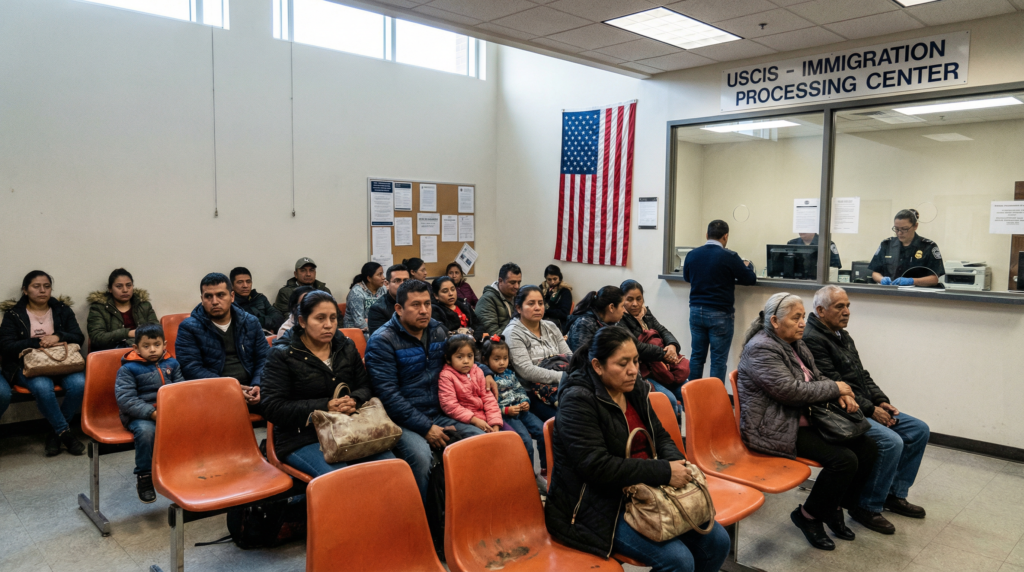
The scope of what the Trump administration froze was broader than most media reports initially captured. A USCIS internal document obtained by CBS News confirmed the suspension was not limited to green card applications — it covered every immigration benefit category without exception.
Specifically frozen under the December 2, 2025 memo:
- Adjustment of Status (green card applications)
- Asylum applications (for all nationalities, not just the 19 — pending a broader review)
- Naturalization applications and citizenship oath ceremonies
- Extensions of Stay and Change of Status requests
- Travel documents and parole documents
- Re-review of approved cases going as far back as January 2021
Yes — even applicants who had already been approved were subject to renewed scrutiny. USCIS directed a “thorough re-review process, including a potential interview and, if necessary, a re-interview” for individuals from these countries who entered after Biden took office in 2021.
“The Trump Administration is making every effort to ensure individuals becoming citizens are the best of the best. Citizenship is a privilege, not a right,” a DHS spokesperson told NPR.
Immigration attorneys reported that their clients — including people on the verge of naturalization — received cancellation notices for oath ceremonies with no explanation or timeline for rescheduling.
The Shooting That Changed Everything: The Lakanwal Case
Understanding why the Trump administration has paused immigration applications from 19 countries requires understanding the political context that triggered it.
Rahmanullah Lakanwal, an Afghan evacuee, entered the United States in September 2021 under the Biden-era humanitarian parole program. He was granted asylum in April 2025 — four months into Trump’s second term. On November 26, 2025, he was charged with first-degree murder for allegedly shooting two National Guard members near the White House, one of whom later died.
DHS immediately seized on the case. A press release from the department was titled: “Terrorist Who Shot Two National Guard Members in D.C. Was Let into the Country by the Biden Administration’s Operation Allies Welcome Program.”
Critics and civil liberties groups noted that Lakanwal’s asylum was actually approved under the Trump administration — a detail the White House largely glossed over. Nevertheless, the shooting became the stated justification for the December 2 USCIS memo and subsequent policy escalations.
The Rapid Escalation: From 19 Countries to 75
The pause announced on December 2, 2025 was just the beginning. Here is how quickly the policy grew:
June 4, 2025 — Presidential Proclamation 10949 imposes the original travel ban on 19 countries.
December 2, 2025 — USCIS memo freezes all immigration applications from those 19 countries, triggered by the DC shooting.
December 16, 2025 — Presidential Proclamation 10998 expands the travel ban to 39 countries, adding 7 to the full ban and 13 more to a partial ban.
January 1, 2026 — The immigration pause expands to cover all 39 countries, per a new State Department update. Individuals with valid visas issued before January 1, 2026 are not affected.
January 21, 2026 — The State Department pauses immigrant visa issuance for nationals of 75 countries pursuing permanent residency, applying a presumption of “public charge” ineligibility. Countries include Brazil, Egypt, Russia, and Somalia.
March 30, 2026 — USCIS announces a partial lifting: it will resume processing for “thoroughly screened asylum seekers from non-high-risk countries,” though the agency has not publicly defined which countries qualify as “high-risk.”

Who Is Exempt? The Narrow Exceptions
While the policy is extraordinarily broad, the State Department and USCIS have outlined limited exceptions. According to the official State Department notice, the following categories may still proceed:
- Lawful Permanent Residents (LPRs) — green card holders are not subject to PP 10998
- Dual nationals applying using a passport from a non-designated country
- Certain diplomatic and official visa holders
- Ethnic and religious minorities facing persecution in Iran
- Special Immigrant Visas (SIVs) for U.S. government employees under 8 U.S.C. 1101(a)(27)(D)
- Athletes, coaches, and support staff for major international sporting events (including the 2026 FIFA World Cup and 2026 Olympics, both hosted in the U.S.)
- Children being adopted by Americans, who may qualify for a National Interest Exception
The Secretary of State, Secretary of Homeland Security, and Attorney General all retain authority to grant National Interest Exceptions on a case-by-case basis.
Critically, no visas issued before January 1, 2026 have been revoked under Presidential Proclamation 10998. Individuals holding valid visas as of that date may continue to travel.
Legal Challenges and International Reaction
Rights groups, the UN refugee agency, and human rights organizations including Amnesty International have strongly condemned the travel bans and immigration freezes. They argue that foreign nationals retain the right to due process and asylum protections under both U.S. law and international legal frameworks.
The Asian Law Caucus notes that USCIS’s December 2 memo appears to contradict established Board of Immigration Appeals (BIA) precedent — specifically Matter of Ognibene, 18 I&N Dec. 453 (BIA 1983) — regarding how dual nationality is treated for immigration purposes.
Immigration attorneys have flagged several practical dangers for affected applicants:
- Applicants may “age out” of visa eligibility while their applications are frozen
- Priority dates earned over years of waiting may be lost
- Job offers tied to visa approvals may expire
- Individuals already in the U.S. face potential reopening of previously closed cases
The American Immigration Lawyers Association (AILA) has documented that consular staffing cuts of over 1,300 DOS employees — including 246 foreign service officers laid off in July 2025 — are further straining the system’s ability to process even those applications that are technically permitted.
The Bigger Picture: Trump’s Immigration Strategy in 2025–2026
The pause on immigration applications from 19 countries is one piece of a vast restructuring of U.S. immigration enforcement. Since returning to office, the Trump administration has:
- Deported more than 605,000 individuals, with another 1.9 million voluntarily leaving the country, according to DHS figures as of December 2025
- Revoked over 6,000 student visas and terminated more than 4,700 student SEVIS records
- Suspended December 2025 interview appointments for H-1B and H-4 visa applicants, with some rescheduled as far out as April 2027
- Ended or restricted Temporary Protected Status (TPS) for Haitian nationals and others
- Frozen the Diversity Visa (DV) Lottery program processing for multiple high-ban countries
The administration has consistently cited national security, visa overstay rates, refusal to accept deportees, and “public charge” risk as the legal and policy basis for these actions.
Frequently Asked Questions (FAQs)
Q1: Which 19 countries are affected by the immigration pause?
The 19 original countries under the June 2025 travel ban are: Afghanistan, Myanmar (Burma), Chad, Republic of Congo, Equatorial Guinea, Eritrea, Haiti, Iran, Laos, Libya, Somalia, Sudan, Yemen (full ban) and Burundi, Cuba, Sierra Leone, Togo, Turkmenistan, and Venezuela (partial ban). As of January 1, 2026, the pause has expanded to cover 39 countries total.
Q2: Does the pause affect people already inside the United States?
Yes. The USCIS December 2, 2025 memo applies to both new and pending applications, regardless of when the applicant arrived. Moreover, previously approved cases going back to January 2021 are subject to re-review and potential re-interview.
Q3: Are green card holders (LPRs) affected?
No. Lawful Permanent Residents holding valid green cards are explicitly exempt from Presidential Proclamation 10998 and the USCIS freeze.
Q4: My citizenship oath ceremony was canceled. What do I do?
Contact your USCIS field office and consult an immigration attorney immediately. The hold on citizenship ceremonies can only be lifted by a new directive from the USCIS Director. Legal advocacy organizations such as the Asian Law Caucus and AILA may also be able to assist.
Q5: Does this affect tourist and business visas?
The immigration benefit pause under the December 2 USCIS memo applies primarily to immigration benefits like green cards, asylum, and naturalization. However, the broader State Department visa suspension under PP 10998 does restrict nonimmigrant B-1/B-2 (tourist/business), F (student), M (vocational), and J (exchange visitor) visas for nationals of the 19 fully-banned countries.
Q6: Can I still apply even if I’m from one of the 19 countries?
According to official State Department guidance, visa applicants subject to PP 10998 may still submit applications and schedule interviews, but they may be ineligible for visa issuance or admission. Applying is not prohibited, but approval is unlikely without a qualifying exception.
Q7: Was the pause ever partially lifted?
Yes. On March 30, 2026, USCIS announced it would lift the freeze for “thoroughly screened asylum seekers from non-high-risk countries.” However, USCIS has not publicly defined which countries qualify as non-high-risk, leaving significant uncertainty for affected applicants.
Q8: Is this the same as the “travel ban” from Trump’s first term?
This is broader and more expansive. Trump’s first-term travel ban (2017–2021) affected 7–8 countries and focused primarily on entry. The current policy covers 19 to 75+ countries and freezes not just entry, but every form of immigration benefit inside the U.S., including for people who already live here legally.
Q9: What legal recourse do affected immigrants have?
Affected individuals can file legal challenges, though courts have generally upheld the President’s broad authority under INA Section 212(f). Immigration attorneys recommend immediately documenting all pending cases, seeking National Interest Exceptions where applicable, and contacting advocacy groups. The National Immigration Law Center and ACLU are actively tracking litigation related to these policies.
Q10: Where can I find official, real-time updates?
- USCIS Policy Alerts
- U.S. State Department Visa News
- DHS Newsroom
- White House Presidential Proclamations
Key Takeaways
The Trump administration has paused immigration applications from 19 countries as part of what is now a rapidly expanding immigration enforcement architecture. What started as a response to a tragic shooting has become a structural transformation of how the United States processes immigration benefits. The policy is sweeping in both breadth and depth — touching not just new applicants but people already living legally in the United States who may have their approved cases reopened.
Whether these measures will survive ongoing legal scrutiny, and whether they will ultimately advance the national security goals cited by the administration, remains hotly debated. What is not in dispute is the scale of disruption already experienced by tens of thousands of applicants, legal residents, and their American family members.
For official updates, consult the U.S. State Department, USCIS, and the Department of Homeland Security. For legal assistance, contact a licensed immigration attorney or visit AILA’s attorney search tool.


